How to Evaluate a Lipedema Surgeon
Look for disease-specific expertise. Not every surgeon who performs liposuction can treat lipedema. The 2 procedures share tools, but they address different concerns.
Cosmetic liposuction reshapes the contours of the body. Lipedema surgery treats a disease. That means your surgeon needs to understand how affected tissue behaves, where lymphatic pathways run, and why the standard approach to fat removal can cause harm if it’s not done by an expert.
When you compare providers, ask whether the surgeon evaluates lipedema as a medical condition rather than a shape concern. A surgeon with real lipedema experience will assess distribution, tissue texture, tenderness, skin quality, and symptom burden before recommending a plan.
Ask What Shapes the Surgeon’s Judgment
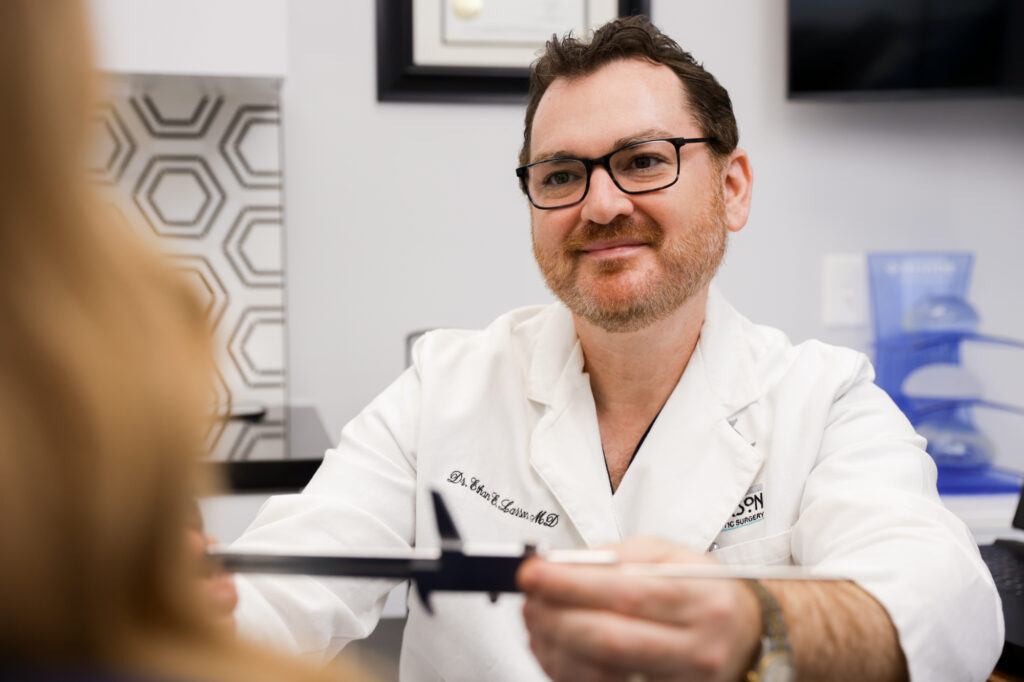
A skilled lipedema surgeon, such as Dr. Larson, doesn’t follow a template. He adjusts based on what he assesses in your initial consultation.
That can include assessing:
- The stage of lipedema
- Where symptoms are affecting you most
- How your skin and tissue have responded over time
- What your body can handle in a single session
These findings influence every decision at a base level. If a surgeon can’t walk you through that reasoning clearly, it’s worth asking more questions.
How Dr. Larson’s Lipedema Research Informs the Plan
Dr. Ethan Larson is 1 of fewer than 5 board-certified plastic surgeons in the United States who focus on the surgical treatment of lipedema. He co-authored the Standard of Care for Lipedema in the United States and contributed to published outcomes research on lipedema reduction surgery.
His background also extends beyond private practice. He previously led the Division of Plastic Surgery and Microsurgery at the University of Arizona and continues to teach as an assistant clinical professor with appointments in surgery and orthopedics.
Dr. Larson bases his recommendations on disease-specific surgical experience, published outcomes data, and national standards work that he helped develop. When he evaluates your situation, he builds the plan from evidence and clinical judgment developed within the field.
Identifying the Stages of Lipedema
Doctors and medical professionals typically describe lipedema in stages based on the tissue’s appearance and feel.
In earlier stages, the skin surface stays relatively smooth, but the fat underneath is larger than normal and feels tender to the touch. As the condition progresses, the tissue becomes more uneven, and small nodules form beneath the skin. Over time, those nodules grow larger, the tissue stiffens, and the limbs change in ways that affect how you move.
Later stages can also involve hardened, fibrotic tissue, folds that restrict mobility, and skin changes that add complexity to any surgical plan. Most patients fall somewhere along this spectrum, and many have different stages in different areas of the body.
How Your Stage Determines the Surgical Approach
Lipedema is often described in stages, but that label alone doesn’t guide surgery. What matters is how the condition is presenting in your body right now—how the tissue behaves, how widespread it is, and how your lymphatic system is functioning.
That’s where the focus shifts. Instead of simply identifying lipedema, we start mapping out what your body can safely support and what process will create meaningful change over time.
For some patients, improvement can happen more quickly, with fewer procedures and a more straightforward recovery. For others, the process requires more patience. Treatment may be spread out over time, with progress building gradually instead of all at once.
That difference is about doing what your body can support safely, and this is where establishing clear expectations becomes especially important.
For example, a more advanced stage does not make surgery less worthwhile. It changes how that improvement happens. Relief may come in steps. Results may feel incremental before they feel complete. And recovery may require more structure between procedures to protect healing and lymphatic function.
Dr. Larson uses your physical presentation alongside his outcomes research to guide these conversations. By comparing your presentation to real patient data, he can explain what progress has looked like for others in a similar position, and what that likely means for you.
Why More Removal Is Not Always Better
It can be tempting to want as much removed as possible in a single session. But aggressive reduction carries real risk.
Removing too much tissue at once can overwhelm the body’s ability to heal, increase the chance of fluid complications, and compromise the lymphatic pathways that lipedema already threatens. We want to see meaningful improvement that your body can recover from safely, not maximum volume in minimum time.
Dr. Larson’s approach reflects this. His commitment to achieving results in the fewest procedures doesn’t mean the most aggressive procedures. This means he meticulously plans and personalizes each session to achieve the greatest benefit without taking unnecessary risks.
When Surgery Becomes the Right Next Step
There’s no single checklist that makes someone a candidate. The decision comes down to whether surgery can meaningfully improve what you are experiencing right now.
For many patients, that point comes when symptoms begin to outweigh what conservative care can manage.
That often includes:
- Heaviness that affects how you move throughout the day
- Tenderness that makes pressure, touch, or activity uncomfortable
- Limitations in mobility, exercise, or daily routines
- Frustration after consistent efforts with compression, nutrition, or lymphatic care without enough relief
At this stage, surgery is no longer about exploring options. It becomes a way to address the underlying tissue that other approaches cannot change. What matters most is not just symptom severity, but whether those symptoms are persistent, progressive, and no longer responsive to nonsurgical care.
When It Makes Sense to Wait or Prepare First
Not every patient benefits from moving directly into surgery, even when lipedema is clearly present.
In some cases, taking more time to assess and review leads to a better result—not a delayed one. The goal of your lipedema surgeon is not to move quickly. It is to take action at the point where your body, your expectations, and your plan are aligned.
That can mean addressing underlying health factors before surgery, taking time to clarify what level of improvement would feel meaningful, or recognizing when your body may not yet tolerate a staged surgical process well. In other cases, symptom patterns may still be evolving, and rushing into treatment too early can make it harder to plan effectively.
In these situations, waiting is not a pause in care. It is part of the treatment strategy.
A lipedema surgeon as experienced as Dr. Larson will tell you when preparation improves your outcome, and when it does not. That distinction is not about caution for its own sake. It reflects the ability to recognize when timing will directly affect how well surgery works and how well you recover from it.
What Improvement Often Looks Like After Lipedema Surgery
Lipedema surgery can reduce diseased fat, relieve heaviness, and make daily movement more comfortable. But for many patients, the biggest change is the gradual return of ease.
For many patients, that change shows up in small but consistent ways before it ever feels dramatic. Movement feels less restricted. Pressure against the skin becomes more tolerable. The constant awareness of certain areas starts to fade.
You may notice it when you sit without shifting to stay comfortable. When walking no longer feels heavy or uneven. When clothing fits without working around one specific area. These are the kinds of changes that tend to matter most because they affect how you move through your day.
That said, improvement does not happen all at once.
Swelling resolves in phases, sometimes over several months. Areas may feel uneven before they settle. And if lipedema has been present for years, the skin may not fully retract even after the underlying tissue has been addressed.
This is where working with an experienced lipedema surgeon is even more vital to a successful outcome. Dr. Larson prepares patients for these patterns early, using both clinical experience and published outcomes data to explain how results tend to develop over time.
As one area improves, other areas can become easier to notice. What once felt like a single, uniform concern may start to feel more specific or localized as overall heaviness decreases. That is part of a staged approach, not a sign that something went wrong.
What Life After Surgery Still Requires
Even after successful treatment, lipedema does not disappear as a condition. Your lipedema surgeon addresses the affected tissue, but long-term stability depends on how your body heals.
That does not mean maintaining a strict or unrealistic routine. It means understanding what helps your body stay comfortable and responding early when something changes.
For some patients, that includes using compression in specific situations. For others, it means keeping movement consistent or adjusting activity when symptoms shift. It’s how we help you avoid losing the progress you’ve gained.
Follow-up care plays a role here as well.
Dr. Larson and his team will continue monitoring how your body responds over time. That may include tracking how swelling resolves, identifying areas that may need attention later, or simply confirming that no further intervention is necessary. That level of continuity keeps the focus on long-term function, not just the procedure itself.
Talk Through Your Options With a Lipedema Surgeon
If you’re at the point where you want clearer answers about your condition and what surgery could realistically look like for you, the next step is a consultation.
Dr. Larson will evaluate your symptoms, concerns, and goals, then walk you through what approach makes sense—and why—so you can move forward with a plan that is informed and specific to you.
Book Your Appointment